Antique English Silverplate Epergne
A most graceful flourish for the table.
A grand fashion in which to display cut blooms as well as fruit and even nuts and bon bons, the epergne as a decorative display dates to the mid-18th century. From the French épargner - meaning to save or preserve, the accessory is thought to have evolved from French dining custom in which the table's centerpiece held multiple components needed for dining. Crafted from crystal, porcelain or silver, an epergne served as the dramatic central focus for a perfectly set table and typically offered fruit, confectionery and candied sweets or what were called "sweetmeats," and later in its evolution, showcased flowers.
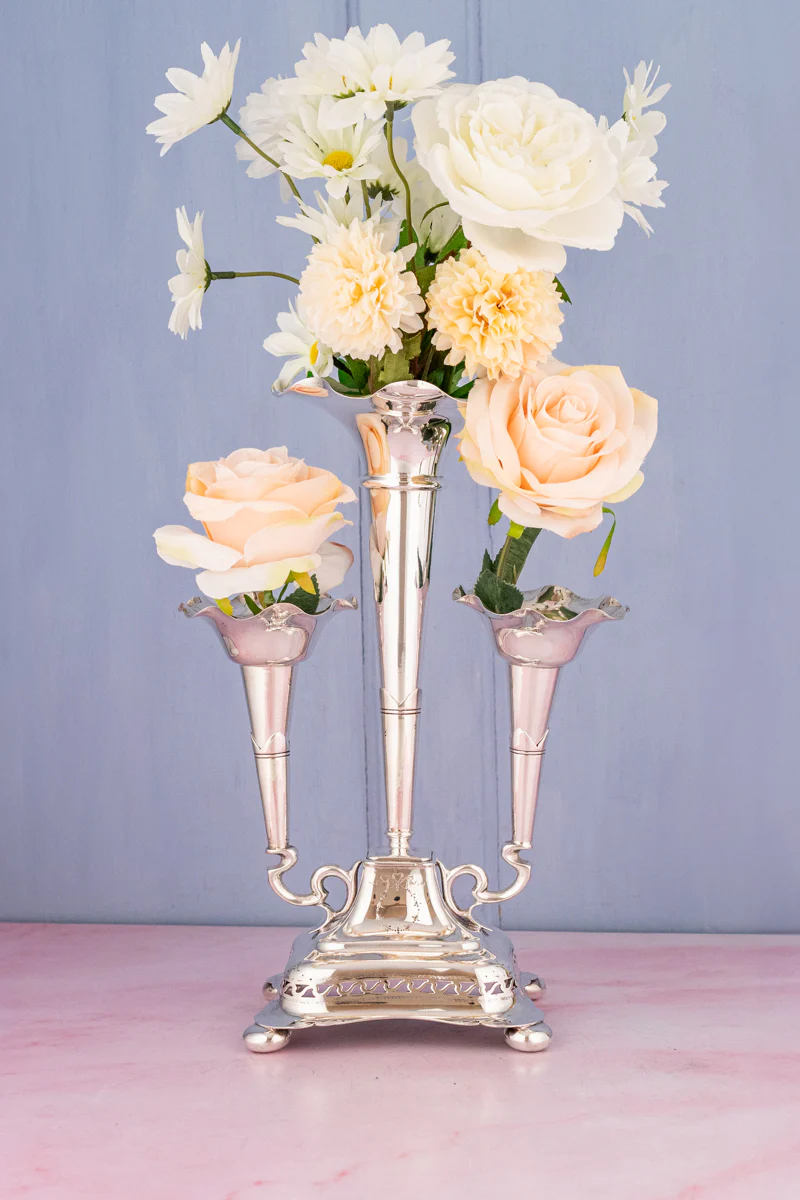
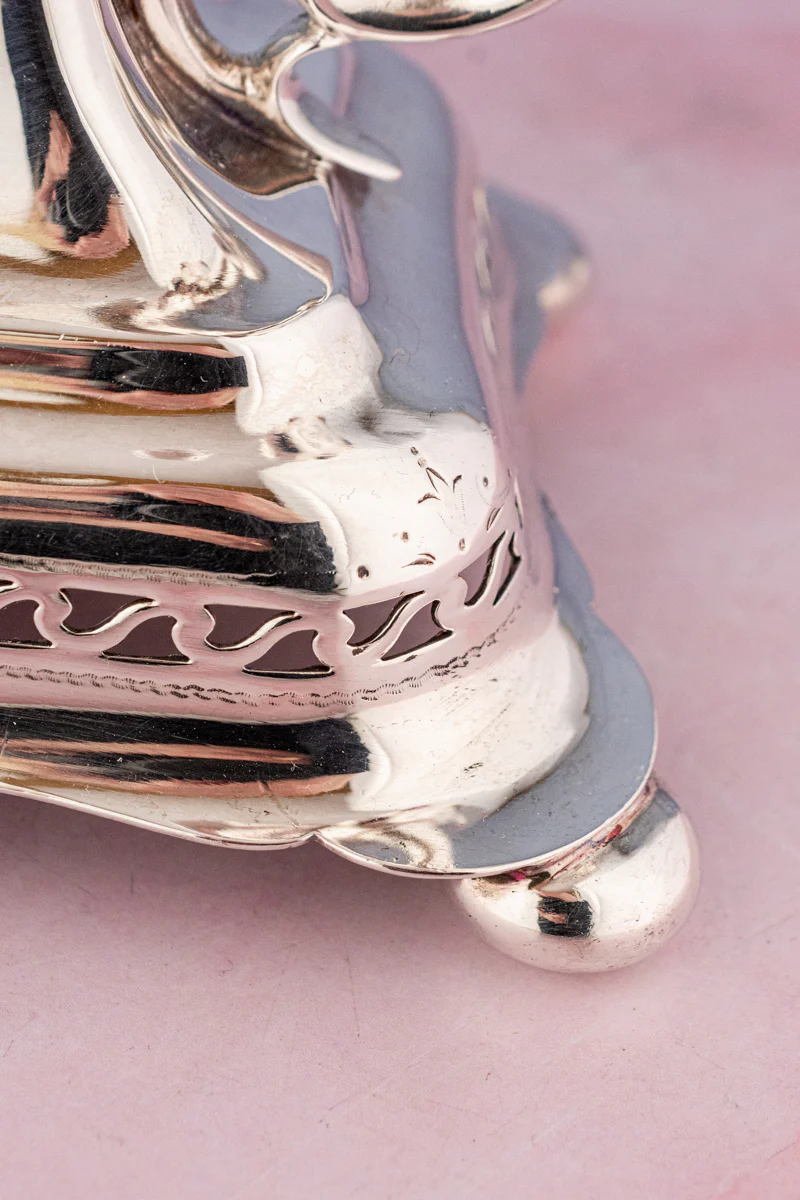
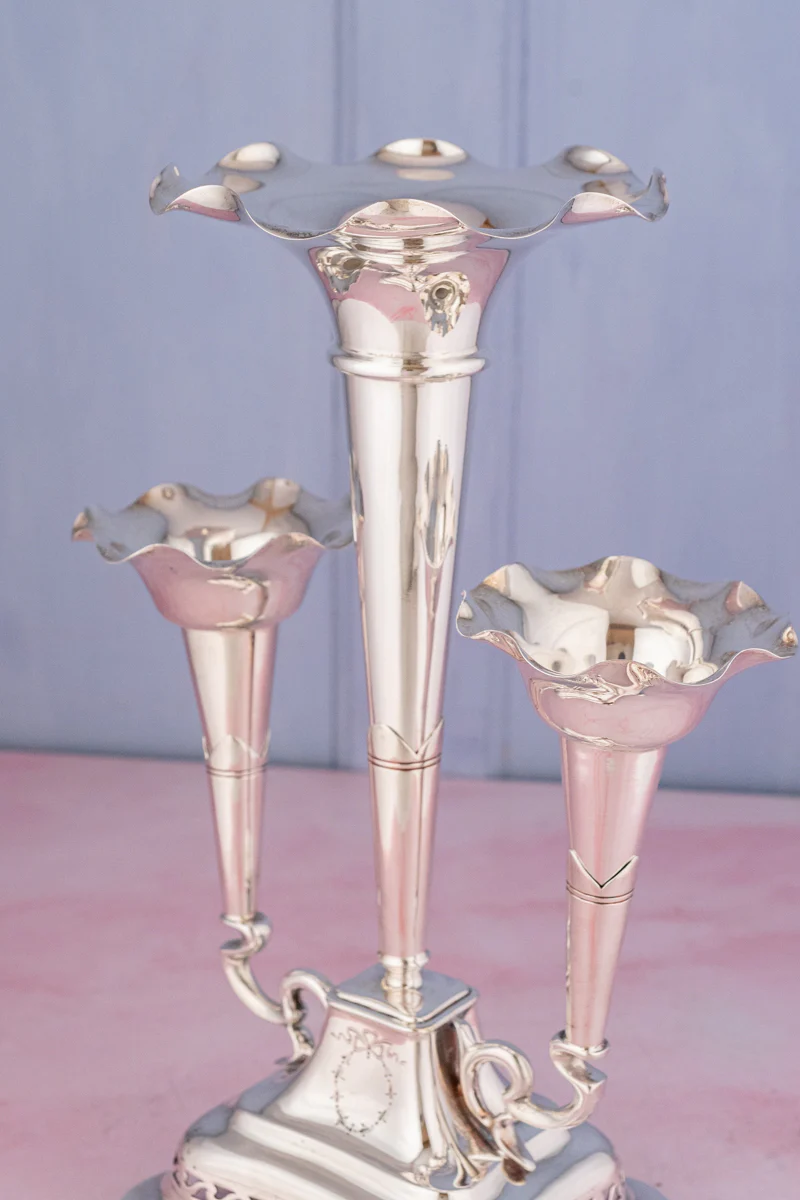
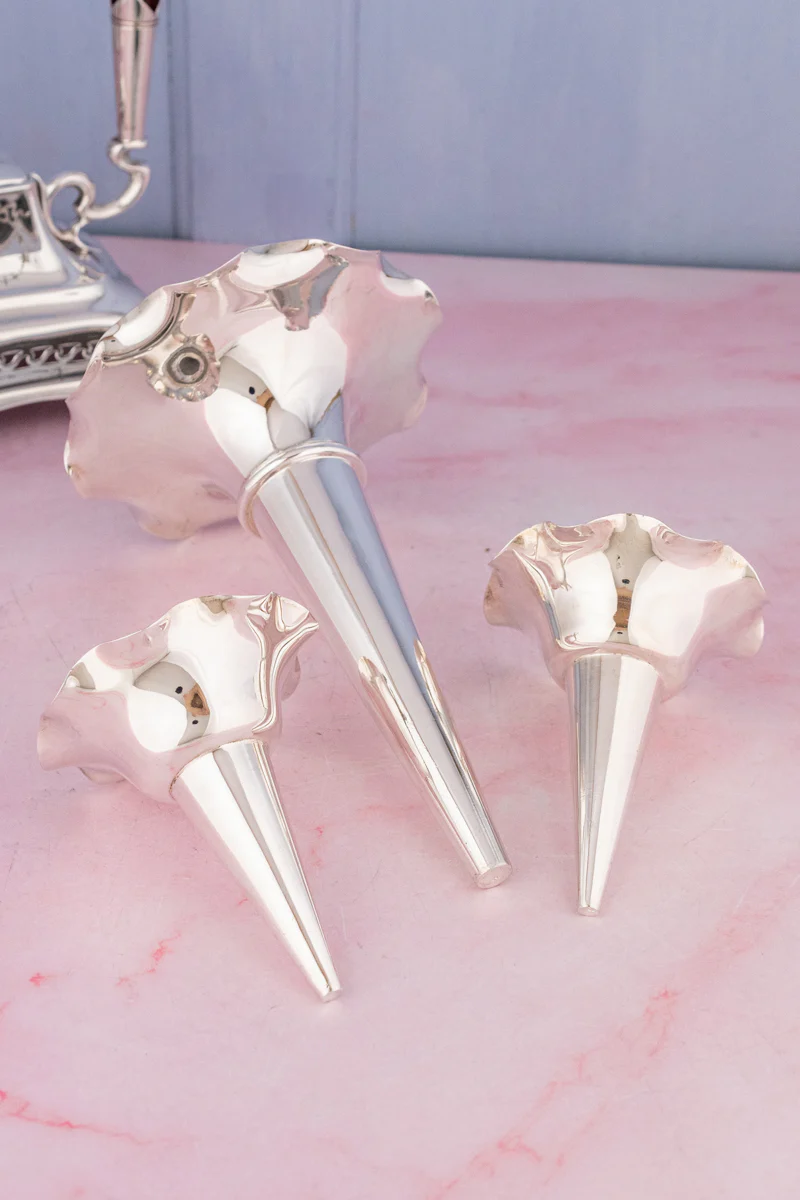
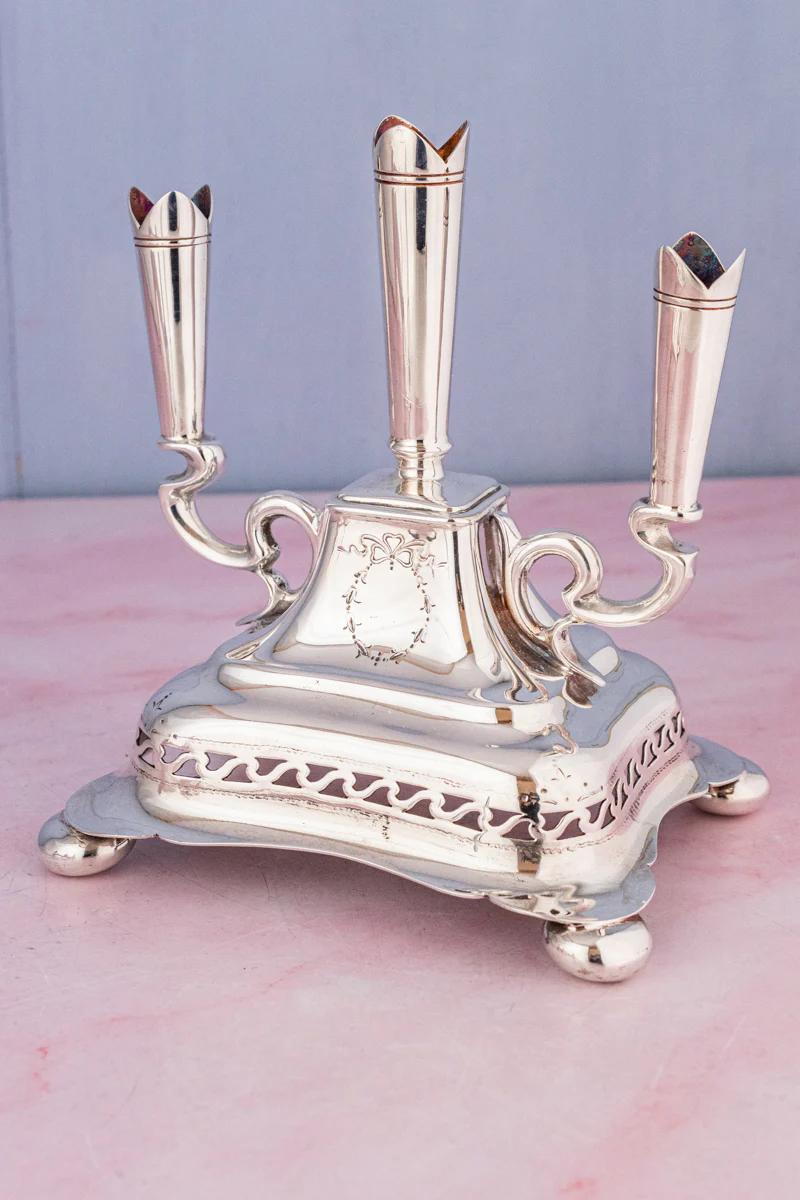
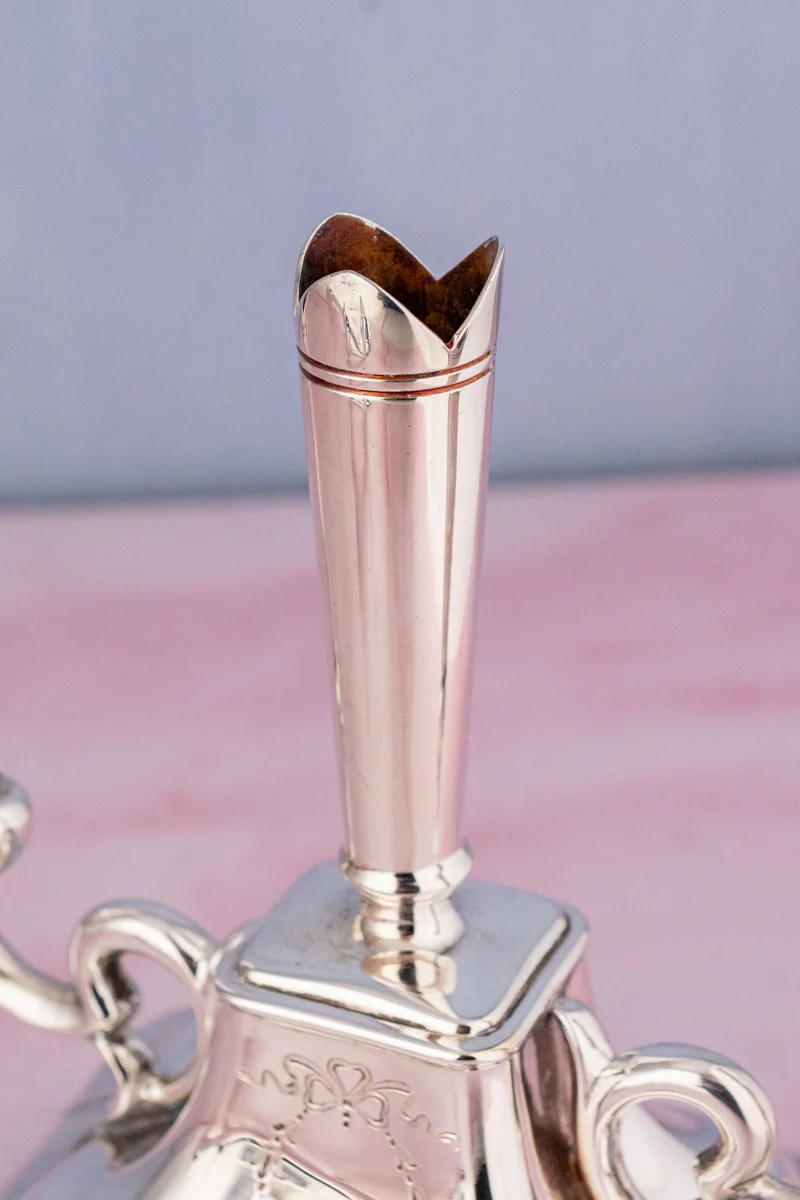
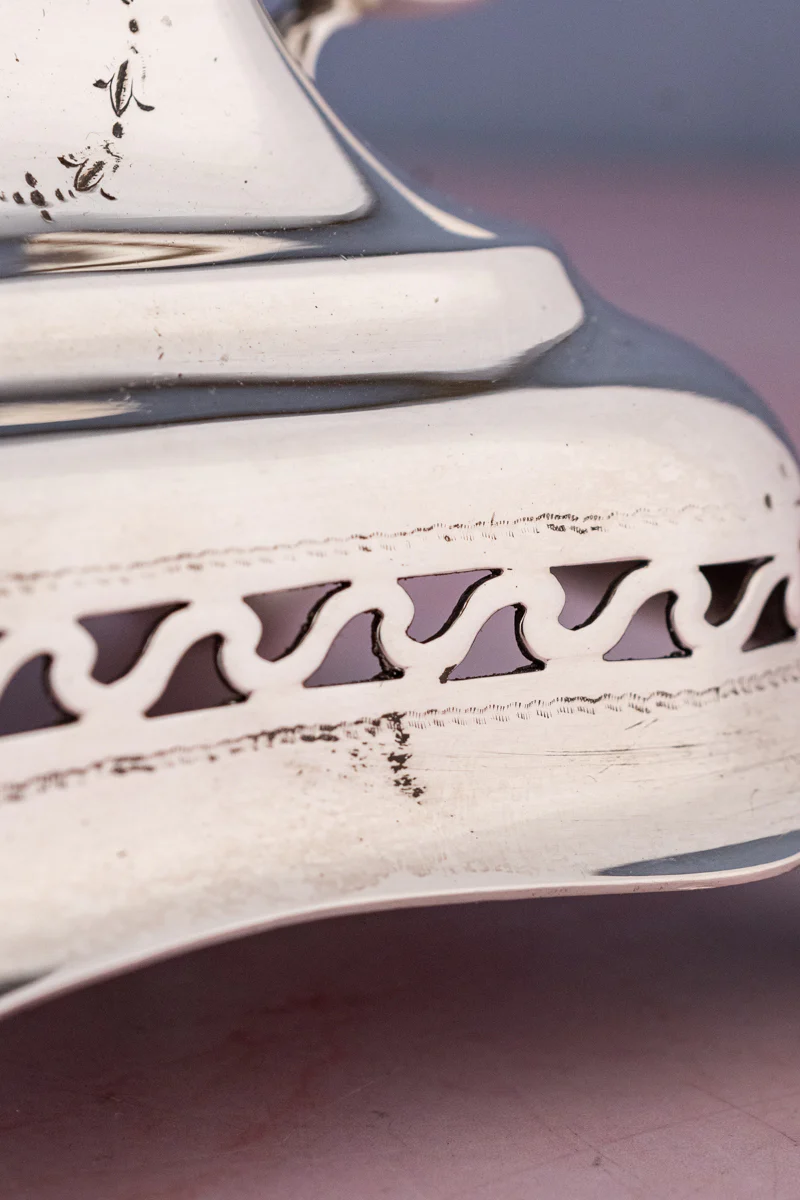
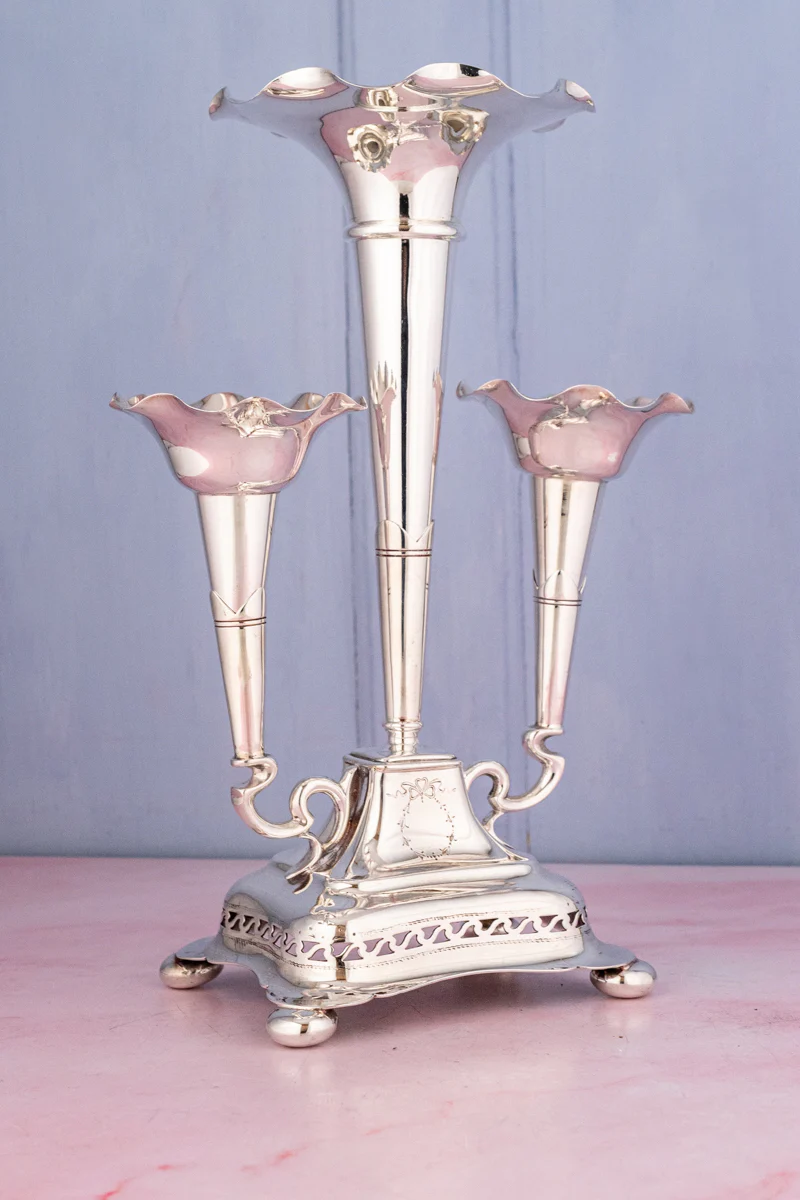
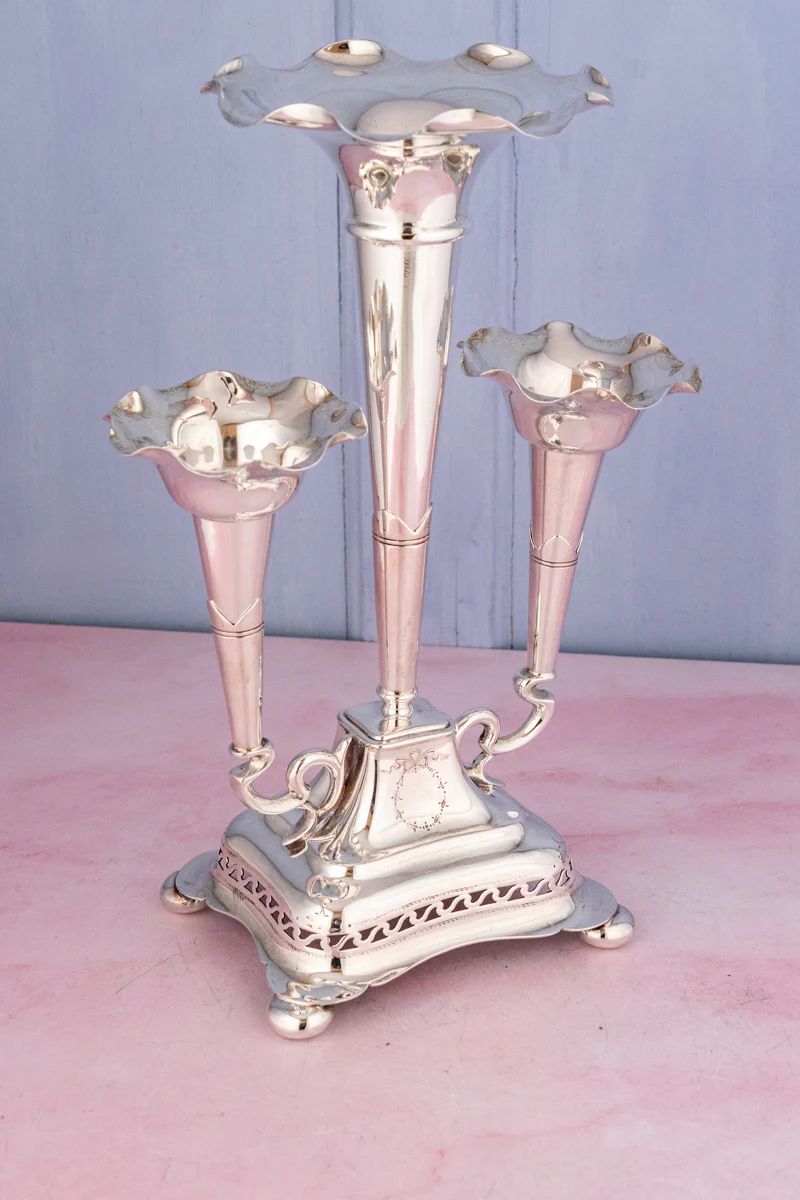
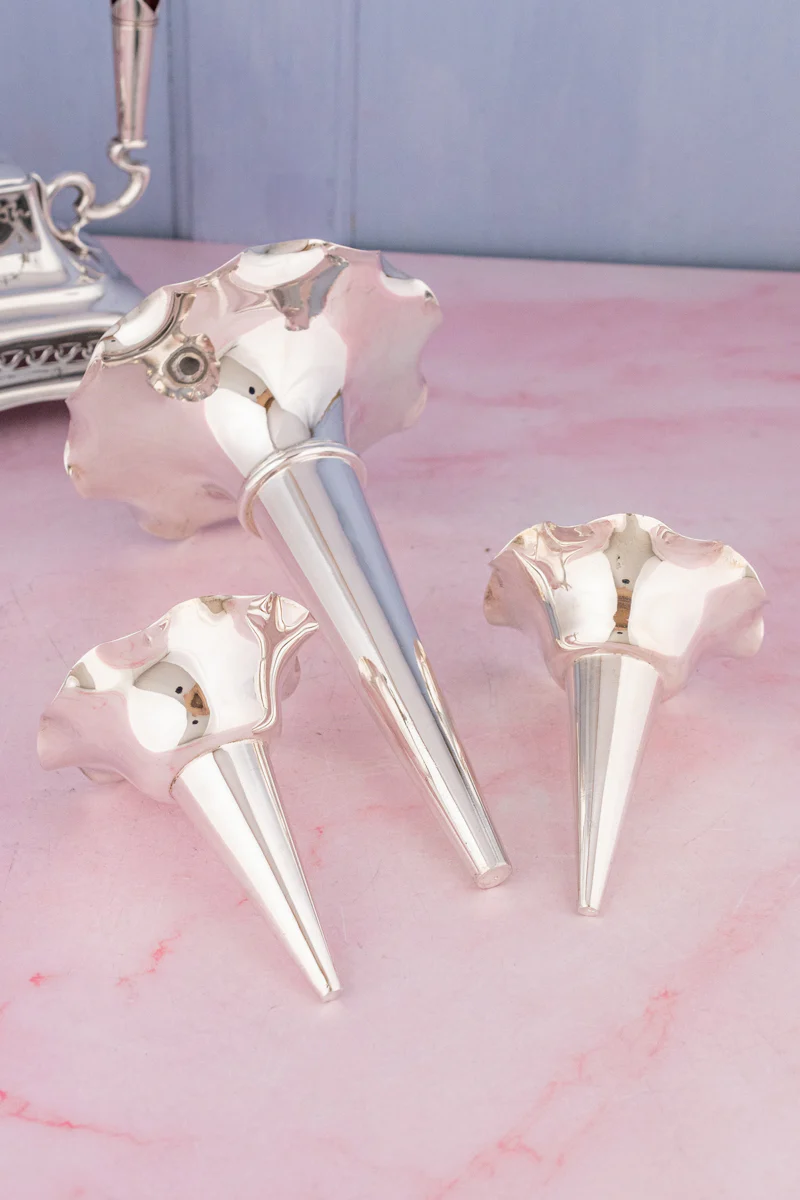
Found at market in England, this lovely Antique Silverplate Epergne captures the charm and ornament of the Victorian era as it slid toward the more sleek lines and easy elegance that would be hallmarks of Edwardian England. Rising from an elegantly shaped base with delicate piercework, the central trumpet vase is accompanied by two arms, each supporting a smaller fluted cup.
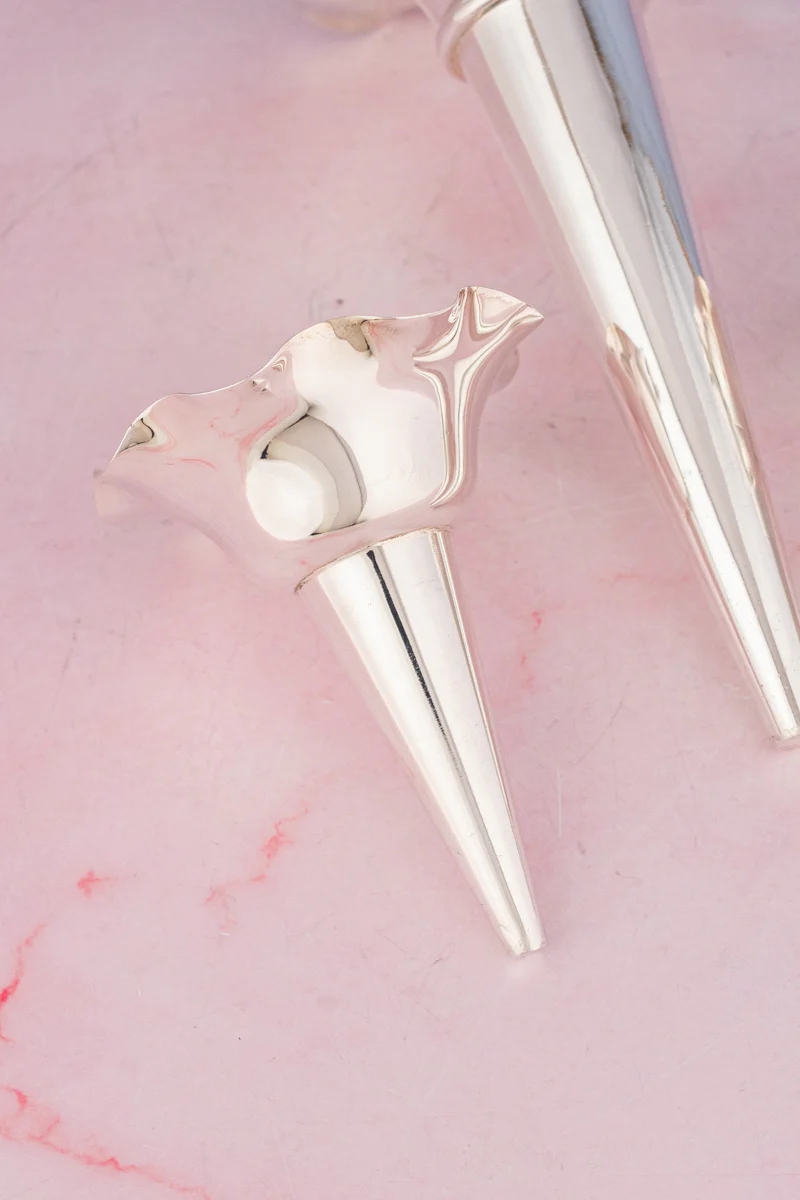
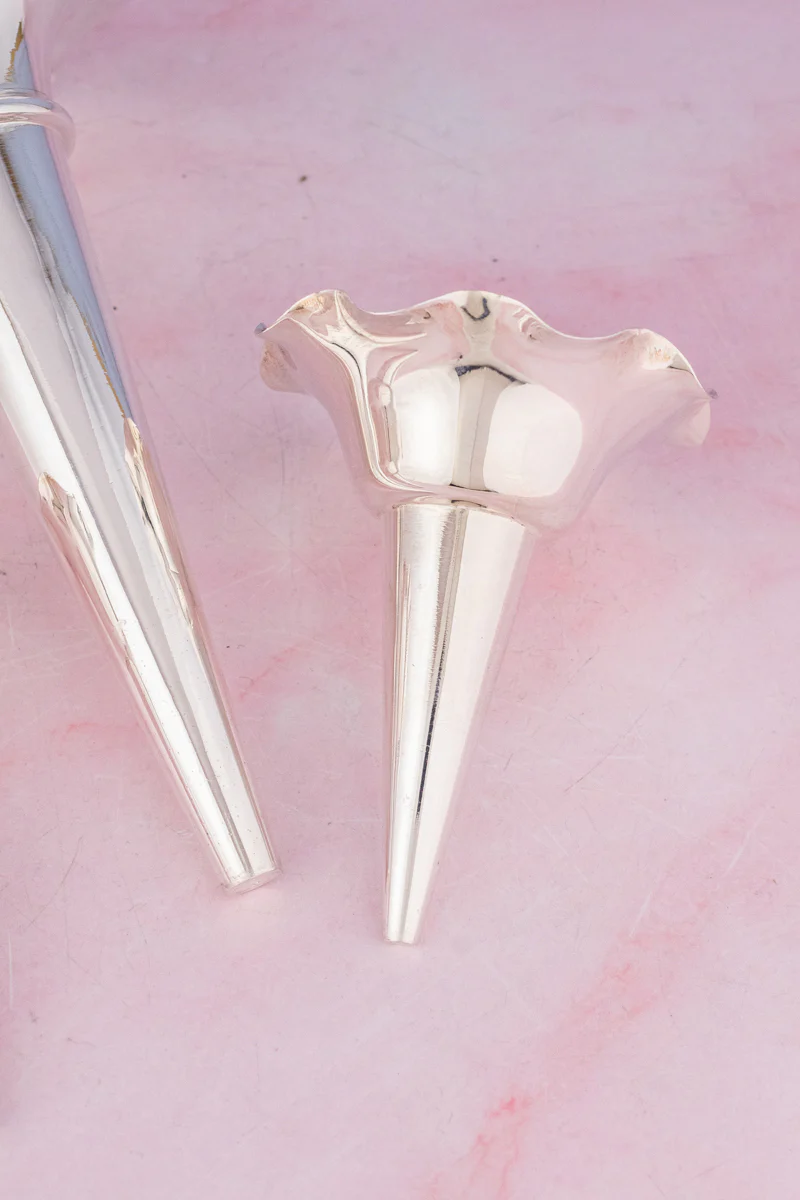
Each bowl is softly scalloped, its ruffled edge catching the light with a subtle shimmer. Whether filled with posies, seasonal greenery, or left unadorned to let the silver shine, it offers a thoughtful decorative accent.
Produced by the renowned Atkin Brothers of Sheffield, this charming epergne feels equally at home at an intimate dinner, on a sideboard layered with silver, or brightening a spring luncheon with fresh blooms.
Strictly one-of-a-kind and subject to prior sale. In very good antique condition. 12.5"H x 9.5" at widest point.
Learn More About the Atkin Brothers
With roots reaching back to the mid-18th century, the Atkin Brothers story began with Thomas Law, whose silversmithing legacy passed through generations to Henry Atkin—an enterprising craftsman who partnered with John Oxley before founding his own firm.
In 1853, Henry’s three sons—Harry Wright, Edward Thomas, and Frank Shaw Atkin—established Atkin Brothers, a name that would come to represent the height of Sheffield silver. Celebrated for their exquisite craftsmanship and innovative designs, the firm upheld the city’s proud silversmithing tradition well into the 20th century.
Original: $550.00
-70%$550.00
$165.00More Images
Antique English Silverplate Epergne
A most graceful flourish for the table.
A grand fashion in which to display cut blooms as well as fruit and even nuts and bon bons, the epergne as a decorative display dates to the mid-18th century. From the French épargner - meaning to save or preserve, the accessory is thought to have evolved from French dining custom in which the table's centerpiece held multiple components needed for dining. Crafted from crystal, porcelain or silver, an epergne served as the dramatic central focus for a perfectly set table and typically offered fruit, confectionery and candied sweets or what were called "sweetmeats," and later in its evolution, showcased flowers.
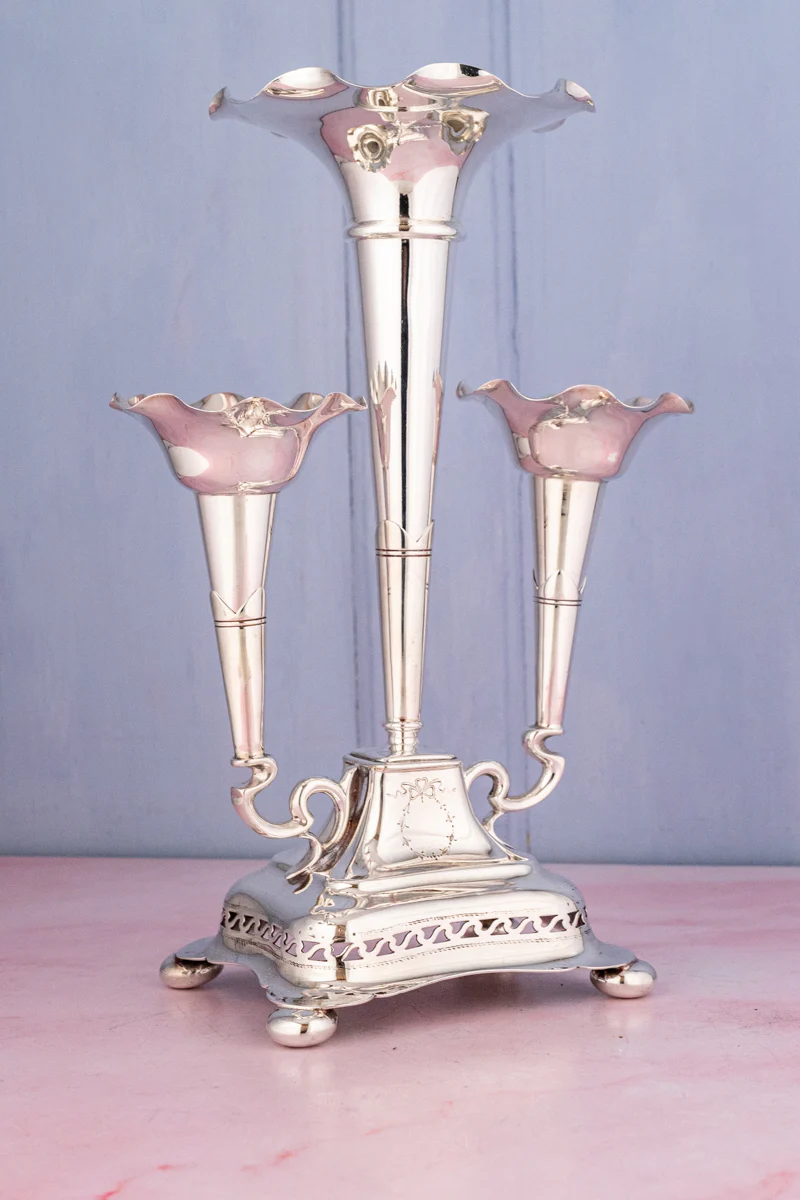
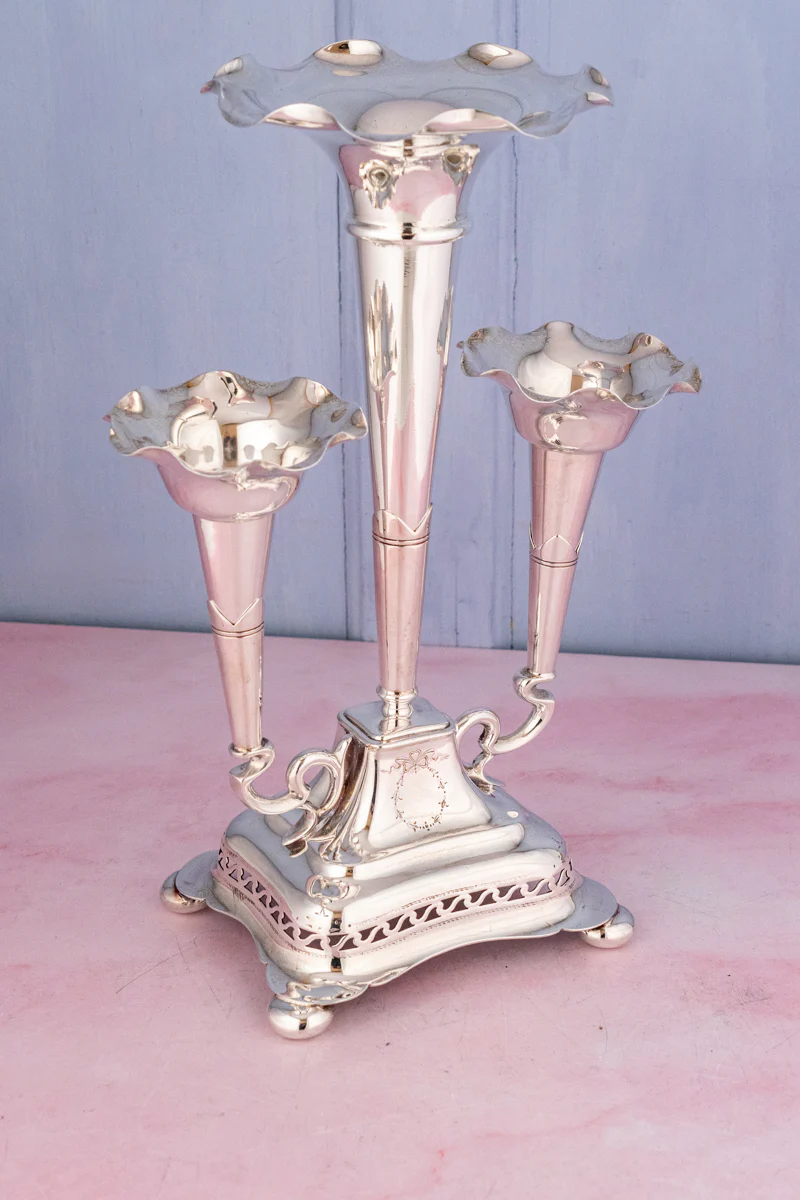
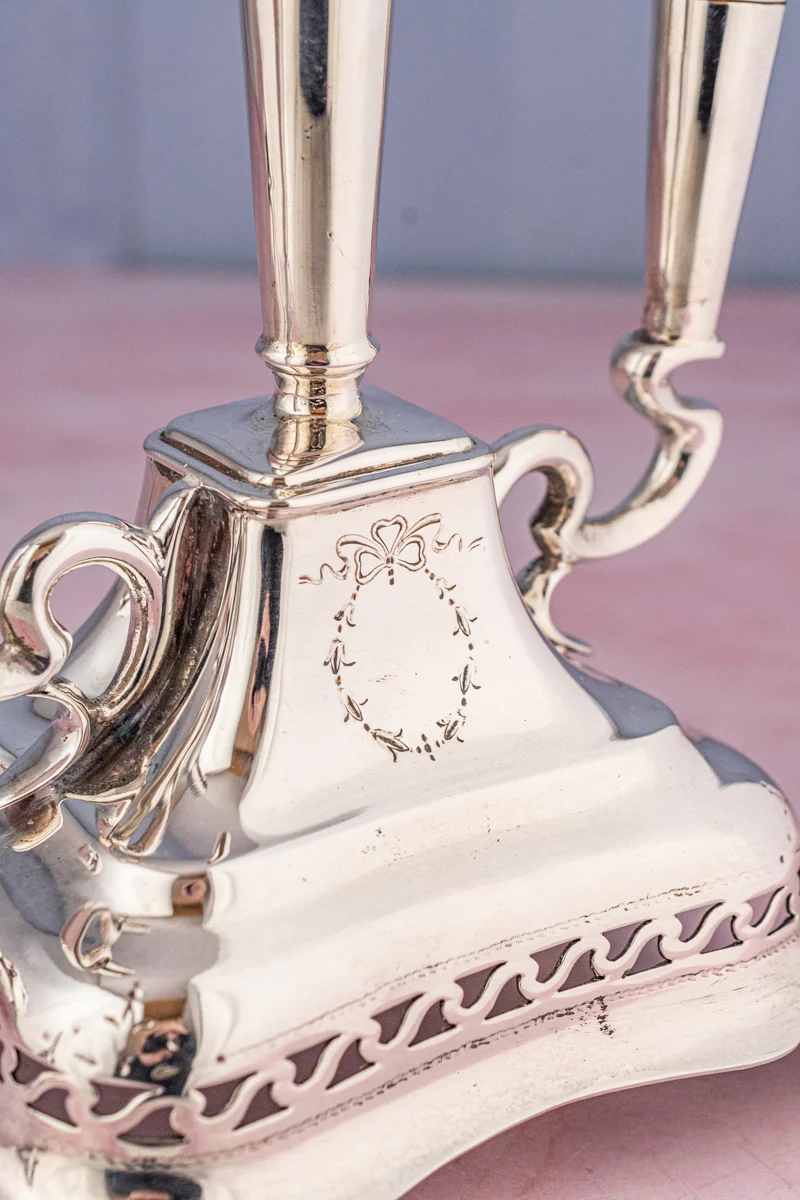
Found at market in England, this lovely Antique Silverplate Epergne captures the charm and ornament of the Victorian era as it slid toward the more sleek lines and easy elegance that would be hallmarks of Edwardian England. Rising from an elegantly shaped base with delicate piercework, the central trumpet vase is accompanied by two arms, each supporting a smaller fluted cup.
Each bowl is softly scalloped, its ruffled edge catching the light with a subtle shimmer. Whether filled with posies, seasonal greenery, or left unadorned to let the silver shine, it offers a thoughtful decorative accent.
Produced by the renowned Atkin Brothers of Sheffield, this charming epergne feels equally at home at an intimate dinner, on a sideboard layered with silver, or brightening a spring luncheon with fresh blooms.
Strictly one-of-a-kind and subject to prior sale. In very good antique condition. 12.5"H x 9.5" at widest point.
Learn More About the Atkin Brothers
With roots reaching back to the mid-18th century, the Atkin Brothers story began with Thomas Law, whose silversmithing legacy passed through generations to Henry Atkin—an enterprising craftsman who partnered with John Oxley before founding his own firm.
In 1853, Henry’s three sons—Harry Wright, Edward Thomas, and Frank Shaw Atkin—established Atkin Brothers, a name that would come to represent the height of Sheffield silver. Celebrated for their exquisite craftsmanship and innovative designs, the firm upheld the city’s proud silversmithing tradition well into the 20th century.
Product Information
Product Information
Shipping & Returns
Shipping & Returns
Description
A most graceful flourish for the table.
A grand fashion in which to display cut blooms as well as fruit and even nuts and bon bons, the epergne as a decorative display dates to the mid-18th century. From the French épargner - meaning to save or preserve, the accessory is thought to have evolved from French dining custom in which the table's centerpiece held multiple components needed for dining. Crafted from crystal, porcelain or silver, an epergne served as the dramatic central focus for a perfectly set table and typically offered fruit, confectionery and candied sweets or what were called "sweetmeats," and later in its evolution, showcased flowers.
Found at market in England, this lovely Antique Silverplate Epergne captures the charm and ornament of the Victorian era as it slid toward the more sleek lines and easy elegance that would be hallmarks of Edwardian England. Rising from an elegantly shaped base with delicate piercework, the central trumpet vase is accompanied by two arms, each supporting a smaller fluted cup.
Each bowl is softly scalloped, its ruffled edge catching the light with a subtle shimmer. Whether filled with posies, seasonal greenery, or left unadorned to let the silver shine, it offers a thoughtful decorative accent.
Produced by the renowned Atkin Brothers of Sheffield, this charming epergne feels equally at home at an intimate dinner, on a sideboard layered with silver, or brightening a spring luncheon with fresh blooms.
Strictly one-of-a-kind and subject to prior sale. In very good antique condition. 12.5"H x 9.5" at widest point.
Learn More About the Atkin Brothers
With roots reaching back to the mid-18th century, the Atkin Brothers story began with Thomas Law, whose silversmithing legacy passed through generations to Henry Atkin—an enterprising craftsman who partnered with John Oxley before founding his own firm.
In 1853, Henry’s three sons—Harry Wright, Edward Thomas, and Frank Shaw Atkin—established Atkin Brothers, a name that would come to represent the height of Sheffield silver. Celebrated for their exquisite craftsmanship and innovative designs, the firm upheld the city’s proud silversmithing tradition well into the 20th century.